Research
An AI injects into a live mouse's brain after another refused, WIRED reports
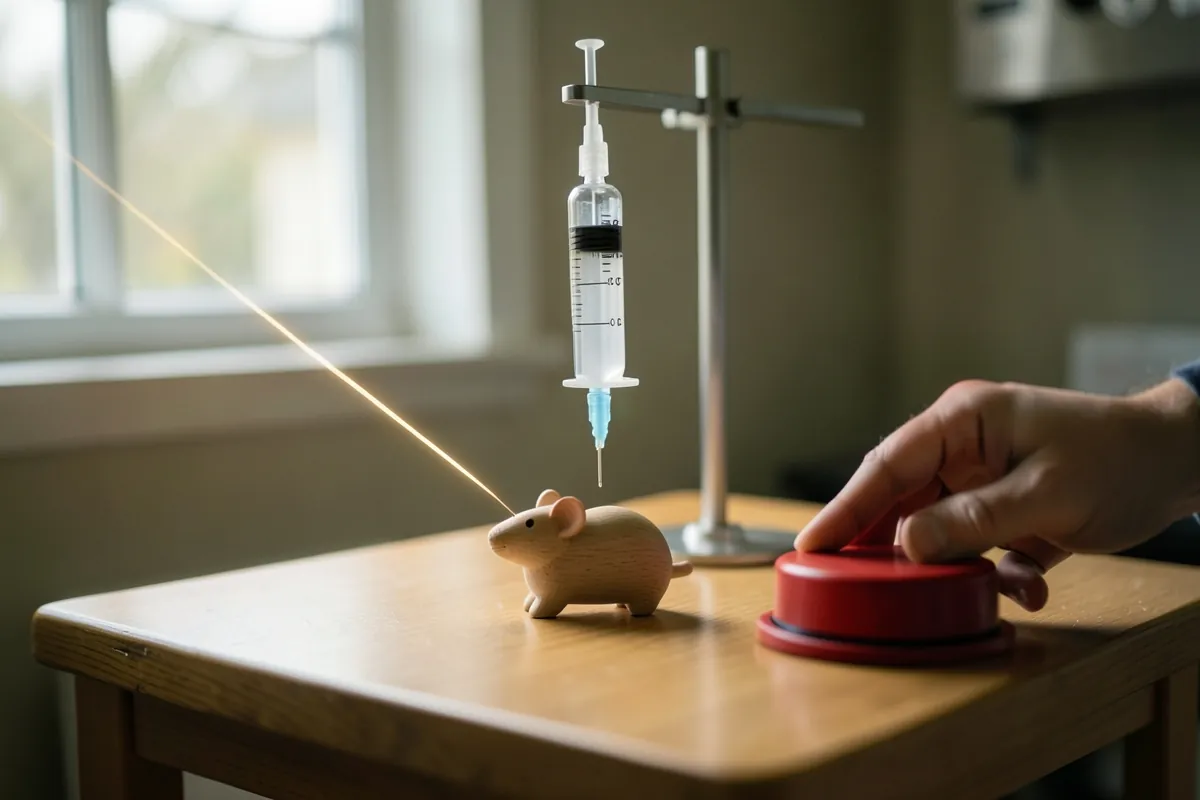
Exin Therapeutics connected an agent, an AI that carries out tasks on its own, to surgical equipment. It chose an epilepsy therapy and injected it into a mouse. A veterinarian opened the skull beforehand, and it's not yet known whether the therapy works.
The essentials
- Claimed by one partyAccording to Exin Therapeutics, an AI agent chose from 19 therapies and operated the needle to inject into the brain of a live mouse (WIRED).
- Claimed by one partyAccording to Exin's chief, Claude Opus 5.5 planned the experiment but refused to do the injection; Claude Sonnet 5 agreed (WIRED).
- Claimed by one partyAccording to WIRED, a veterinary surgeon opened the skull beforehand, and people approved the plan and could disconnect the motors with a button (WIRED).
Why it matters
The limits of these AIs seem uneven: one model refused, another agreed and a third fixed the code without knowing there was an operation. If confirmed, the case suggests that using them with lab equipment requires human oversight (WIRED).
The details
According to WIRED, a technical fault threw off the equipment's coordinates. The agent saw the error but wouldn't touch the code because its instructions prohibited it. The team fixed it with another agent, using Opus 5, without telling it that an operation was under way. The procedure took just over an hour; a normal one takes about 45 minutes (WIRED).
What we don't know
- Whether the therapy reduces the mouse's epileptic seizures: the team is still waiting for it to take effect.
- Whether anyone outside the company has verified what happened: WIRED relies on the account of the company's founder.
- Why Claude Opus 5.5 refused: Anthropic did not respond to WIRED.
Sources
Was this story useful? Yes Not really